Daily Meal Planner Canva Template
Planning meals isn’t just about nutrition—it’s about intentionality, consistency, and operational clarity. For creators building digital products on Kindle Direct Publishing (KDP), the Daily Meal Planner Canva Template is more than a design asset. It’s a strategic lever: one that bridges content structure, brand coherence, and market responsiveness—without requiring graphic design expertise.
Why This Template Fits Real-World Publishing Goals
Most KDP planners fail not from poor ideas—but from inconsistent execution. A planner with mismatched spacing, unreadable fonts, or misaligned grids undermines credibility before the first page is turned. The Daily Meal Planner Canva Template solves this by delivering print-ready interior layouts built to Amazon’s specifications—margins calibrated, bleed zones respected, typography hierarchy tested. That means fewer rejections, faster approvals, and less time troubleshooting formatting in Kindle Create.
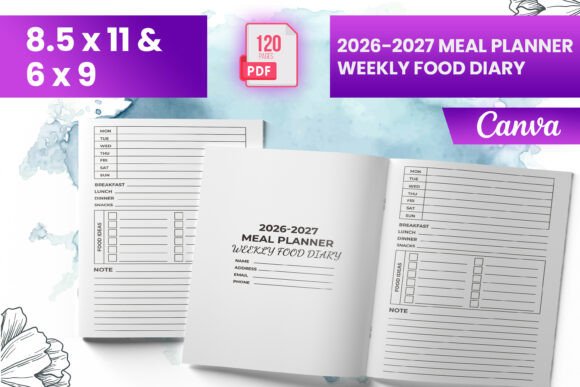
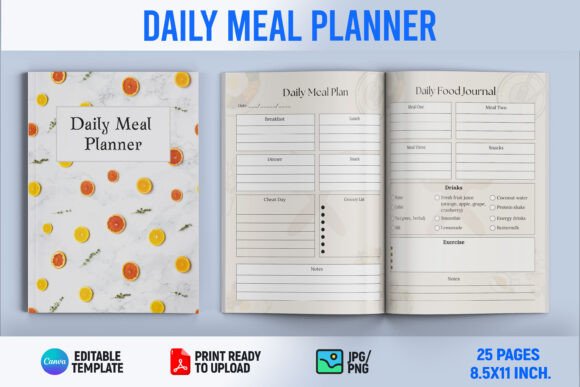
But its real value emerges when you shift perspective: this isn’t just a “fill-in-the-blank” tool. It’s a framework for decision-making. Each section—breakfast, lunch, dinner, snacks, notes—is intentionally spaced to support reflection, not just logging. That subtle design choice encourages users to pause, assess, and adjust—not just consume.
Strategic Use Cases Beyond the Obvious
Yes, it works for meal tracking. But consider how it supports broader business outcomes:
- Brand positioning: When you customize colors, headers, and icons to match your existing health-coaching course or wellness newsletter, the planner becomes a tactile extension of your voice—not a generic download.
- Product bundling: Pair the editable Canva file with a short video tutorial (“How to Customize Your Planner in 7 Minutes”) and offer it as a lead magnet. That builds trust *before* someone buys your main guide or subscription.
- Content repurposing: Export your edited version as a PDF, then extract weekly meal themes into Instagram carousels or email sequences. One template fuels multiple touchpoints—no new writing required.
This flexibility matters most when your audience expects cohesion. A reader who follows your Instagram tips on mindful eating will notice—and appreciate—if your planner uses the same tone, color palette, and visual rhythm.
How to Approach Customization With Purpose
Customization without direction leads to clutter. Before opening Canva, ask three questions:
- What outcome do I want this planner to drive? Is it habit formation? Weight management? Family meal coordination? Your answer determines which fields to emphasize—or simplify. For example, adding a “Grocery Prep Time” column supports time-pressed parents; omitting it keeps focus sharp for solo professionals.
- What does my audience actually need—not what looks nice? A minimalist layout with ample white space serves readers overwhelmed by choice. A version with checkboxes, icons, and margin notes suits those who thrive on visual cues. Don’t default to “more features.” Default to *fewer distractions*.
- Where will this live after publishing? If you plan to sell it as a low-cost KDP paperback ($6.99–$9.99), prioritize clean black-and-white interiors and avoid thin fonts that won’t reproduce well on print-on-demand paper. If it’s a premium digital download, leverage Canva’s color tools—but test contrast ratios for readability on tablets and phones.
One practical tip: duplicate the template before editing. Keep one version as your master file (with all layers intact), and use another for final export. That way, you preserve flexibility for future variations—like a keto-specific edition or a vegetarian-only layout—without rebuilding from scratch.
Risks of Using the Template Without Context
The biggest risk isn’t technical—it’s strategic drift. When creators treat the Daily Meal Planner Canva Template as a shortcut rather than a scaffold, they often:
- Over-customize without testing—adding too many sections, shrinking text to fit, or using decorative fonts that sacrifice legibility;
- Ignore audience context—launching a highly detailed macro-tracking version to beginners who need simplicity first;
- Underestimate production discipline—skipping proofreading, neglecting consistent hyphenation, or exporting at low resolution, which triggers Amazon’s quality warnings.
None of these are flaws in the template. They’re symptoms of skipping the planning step before designing. A strong template amplifies clarity—but only if clarity comes first.
Long-Term Value: From One-Time Product to Sustainable System
Think beyond the single book launch. The Daily Meal Planner Canva Template becomes valuable when integrated into your broader content ecosystem:
Imagine launching your planner alongside a free 5-day email challenge (“Plan Your Week in 10 Minutes”). Each email references a specific section of the planner—“Open to Tuesday’s dinner slot. See how the blank space invites flexibility?” That transforms passive consumption into active engagement. Later, you can survey readers: “Which section did you use most? What felt missing?” Their answers inform your next planner iteration—or even a companion journal, cookbook, or workshop.
That’s how templates evolve from static assets into living feedback loops. You’re not selling pages—you’re offering structure that adapts to real behavior. And because Canva allows rapid iteration, you can test small changes (e.g., moving the water tracker from the bottom to the side) across versions and measure impact through download rates or review sentiment.
Practical Planning Tips for First-Time Users
- Start with the spine. In KDP, interior files must match exact trim sizes (e.g., 6" x 9"). Verify your Canva document settings *before* adding content. A 0.1" discrepancy causes cropping issues no amount of editing fixes.
- Use Canva’s “Brand Kit” feature. Save your primary font pair and two core colors there. Apply them consistently across headers, subheads, and callouts—even in notes sections. Consistency signals professionalism, not repetition.
- Test printability early. Export a single-page PDF and open it in Preview (Mac) or Adobe Acrobat. Zoom to 200%. Look for jagged edges, blurry icons, or faint gray text. If it’s unclear at high zoom, it’ll be illegible on matte paper.
- Leave room for growth. Design your first version with modularity in mind. Avoid embedding images directly into text boxes—place them on separate layers so swapping out icons or photos later takes seconds, not hours.
Final Thought: Tools Serve Strategy—Not the Other Way Around
The Daily Meal Planner Canva Template doesn’t guarantee sales. But it does remove friction between idea and execution—so you can invest energy where it counts: understanding your audience’s real struggles, refining your messaging, and building offerings that compound over time. That requires patience, observation, and restraint—not just speed.
So before you click “Edit in Canva,” pause. Define your goal. Sketch one user’s typical week with your planner open beside them. Then ask: Does this layout make their life measurably easier? If yes, customize with confidence. If not, revise the goal—not the template.
Because the best tools don’t replace thinking. They protect it.