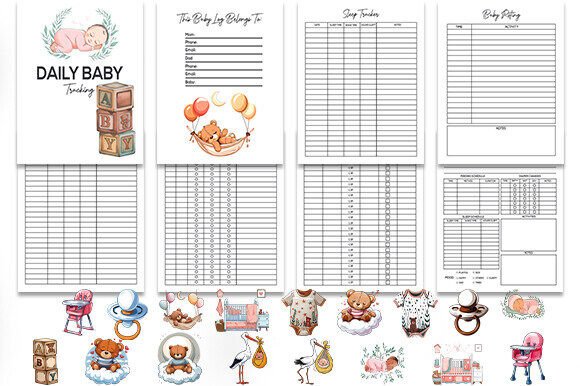
Daily Baby Tracking: A Practical Resource for Consistent, Visual Milestone Recording
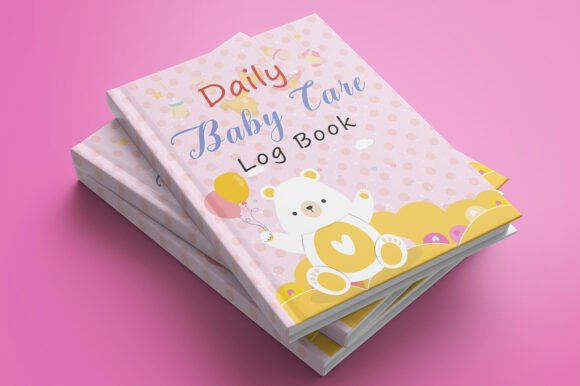
Daily Baby Tracking refers to a structured, printable system designed to help caregivers record and reflect on an infant’s daily experiences—feeding, sleeping, diaper changes, mood, developmental cues, and early milestones. Unlike digital apps that auto-sync or generate analytics, Daily Baby Tracking emphasizes intentional, hands-on documentation. Its core value lies in simplicity, consistency, and visual clarity—not automation.
What Sets Daily Baby Tracking Apart
The specific resource described—“Your Download Will Include AI Files, PDF Files, SVG Files, High-Resolution JPEG, 8 Pages, Clip Art (17), ONLY PNG (300 DPI)”—represents a high-fidelity, multi-format design package. It is not software or a subscription service. Instead, it’s a set of editable, print-ready assets intended for personal use across devices and platforms.
This distinction matters: Daily Baby Tracking gives users full ownership and flexibility. You can print pages as needed, import vector files (AI/SVG) into design tools like Adobe Illustrator or Canva, layer clip art over custom layouts, or embed high-res PNGs into digital journals. The 300 DPI resolution ensures sharpness whether printed on home inkjet paper or professional photo stock.
Compared to generic baby journals or free online templates, this version prioritizes production quality and adaptability. The inclusion of 17 distinct clip art elements—such as bottles, pacifiers, footprints, and sleep icons—supports visual shorthand without requiring artistic skill. That makes it especially useful for parents who want clarity at a glance but don’t have time to draw or format from scratch.
How It Compares to Other Documentation Approaches
Digital tracking apps offer real-time reminders, trend graphs, and cloud backup—but they also require consistent device access, battery life, and data privacy consideration. Daily Baby Tracking doesn’t replace those functions. Rather, it serves a different need: tactile reflection, reduced screen time during caregiving hours, and the ability to archive physical records without platform dependency.
Handwritten notebooks are similarly low-tech and accessible—but lack standardized structure, scalability, and visual consistency. With Daily Baby Tracking, each page follows a repeatable layout. That uniformity helps surface patterns over time: for example, spotting how nap length shifts between weeks two and six becomes easier when entries occupy identical grid positions across eight pages.
Free printable PDFs often limit customization—locked text, no vector support, low-resolution graphics. In contrast, the AI and SVG files included here allow resizing without pixelation; the JPEG and PNG options provide compatibility across both professional printing services and everyday photo apps. This range of formats supports varied workflows: some users prefer filling out a printed PDF with a pen; others build custom dashboards in Notion using the PNGs as status indicators.
Strengths in Real-World Use
- Consistency without rigidity: The 8-page structure provides enough space for detailed daily notes while avoiding overwhelm. Each page covers one day across multiple categories—no need to flip between tabs or scroll endlessly.
- Design flexibility: Because AI and SVG files are editable, users can adjust colors, fonts, or layout spacing to match personal preferences or accessibility needs (e.g., larger text for low-vision users).
- Offline reliability: No internet connection, login, or update required. Ideal for travel, rural areas, or families minimizing device use around newborns.
- Archival readiness: High-resolution PNGs and print-optimized PDFs ensure long-term legibility—even after years in a keepsake box or scanned into a family archive.
Tradeoffs to Consider
Daily Baby Tracking does not auto-calculate averages, send notifications, or sync across devices. If you rely heavily on predictive feeding windows or need shared access for co-parenting partners across time zones, a collaborative app may better suit those specific coordination needs.
It also assumes a baseline level of comfort with file management—opening AI files requires compatible software (e.g., Adobe Illustrator, Affinity Designer, or free alternatives like Inkscape). Users unfamiliar with vector editing may find the SVG or AI formats less immediately usable than the ready-to-print PDF or JPEG versions.
Additionally, while the 17 clip art elements cover common themes, they do not include culturally specific symbols, medical notation (e.g., oxygen saturation levels), or bilingual labeling. Those seeking highly specialized or clinical-grade tracking would need supplemental resources.
When Daily Baby Tracking Fits Best
This resource shines in three overlapping scenarios:
- Newborn adjustment phase: When energy is low and cognitive load is high, having a clean, intuitive page to fill out in five minutes—without navigating menus or troubleshooting logins—reduces friction significantly.
- Hybrid documentation: Parents who use both analog and digital systems often find Daily Baby Tracking ideal for capturing raw, unfiltered observations before summarizing highlights elsewhere. For instance, jotting down fussiness triggers by hand, then later entering only key trends into a shared app.
- Long-term memory keeping: Families interested in preserving tangible artifacts—like scanning completed pages into a digital album or binding them into a physical book—benefit from the print-grade resolution and consistent formatting.
It also aligns well with evidence-informed caregiving practices that emphasize observation over quantification. Research suggests that attentive, non-judgmental note-taking—especially around behavioral cues—can strengthen parent-infant attunement. Daily Baby Tracking supports that process by encouraging focused attention rather than passive data entry.
When Another Option Might Be More Appropriate
If your primary goal is identifying subtle health patterns—such as correlating stool color with feeding intervals or tracking weight gain against WHO growth charts—then clinically oriented tools with built-in reference standards may offer more actionable insight.
For families managing complex medical needs (e.g., preterm infants, feeding tubes, or neurodevelopmental monitoring), customizable digital platforms with templated assessments or integration with pediatric EHRs may provide greater utility than static printable pages.
And if minimalism is a priority—where even eight pages feels excessive—simpler single-sheet trackers or minimalist bullet journal spreads could reduce overhead without sacrificing usefulness.
Making an Informed Choice
Selecting a tracking method isn’t about finding the “best” tool—it’s about matching functionality to your current capacity, goals, and values. Daily Baby Tracking excels where intentionality, visual clarity, and offline resilience matter most. It supports reflection, not just recording. It invites presence, not distraction.
Before deciding, ask yourself: Am I comfortable managing multiple file types, or do I need plug-and-play simplicity?
There’s no universal answer. But understanding what Daily Baby Tracking offers—and where its boundaries lie—helps narrow the field meaningfully. Whether used alone or alongside other tools, it provides a grounded, adaptable foundation for one of life’s most detail-rich transitions.