Daily Baby Care Tracker Log Book: A Practical Framework for Consistent, Confident Infant Care
Consistency in infant care isn’t just comforting—it’s foundational. From the first week home from the hospital to the early months of rapid developmental shifts, babies thrive on predictable rhythms: regular feeding windows, responsive diapering, restorative sleep cycles, and intentional tummy time. Yet for many caregivers—whether new parents navigating uncharted territory, seasoned nannies managing multiple children, or postpartum doulas supporting family transitions—keeping pace with these overlapping routines can feel overwhelming. Memory fades. Details blur. Handwritten notes scatter across sticky pads and phone memos. That’s where a structured, purpose-built tool like the Daily Baby Care Tracker Log Book becomes more than convenience—it becomes continuity.
How Structured Observation Supports Developmental Awareness
Babies communicate through behavior, not words. A slight change in feeding duration, a shift in nap length, or a new pattern of fussiness may signal growth spurts, emerging teeth, or subtle shifts in digestion or sleep architecture. Without consistent documentation, these signals risk being misinterpreted—or missed entirely. The Daily Baby Care Tracker Log Book provides a standardized observational framework that transforms subjective impressions into objective data points. For example, tracking feeding times across three days reveals whether a baby is clustering feeds before a growth spurt—or showing early signs of reflux. Noting diaper output alongside stool consistency helps distinguish normal newborn transition from potential dehydration or intolerance. This isn’t about rigid scheduling; it’s about building awareness grounded in evidence.
Design Elements That Reduce Cognitive Load
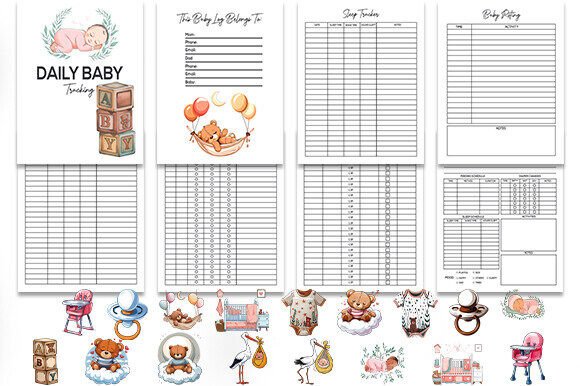
What sets the Daily Baby Care Tracker Log Book apart isn’t just its function—but how thoughtfully its layout aligns with real-world caregiver constraints. Its 8.5 x 11 inch format offers ample writing space without requiring magnification or cramped handwriting. Each page is divided into intuitive daily log sections—not as isolated checkboxes, but as interrelated columns: feeding (type, start/end time, duration, side used), diaper changes (wet/dirty/time/notes), sleep (nap start/end, total duration, environment cues), and tummy time (length, position, engagement level). Crucially, these aren’t siloed. A parent noticing increased wakefulness after a particular feeding can cross-reference timing, content (breast vs. bottle), and subsequent diaper output—all on one page. The “Notes & Observations” section isn’t an afterthought; it’s a contextual anchor—where you might record, “Baby held eye contact longer during second morning tummy time,” or “Refused left breast at 4 p.m., fussy but no fever.” These qualitative insights gain meaning when anchored to quantitative logs.
Applications Across Diverse Care Contexts
The utility of the Daily Baby Care Tracker Log Book extends far beyond solo parenting. In shared-care households—where partners alternate night feeds or grandparents step in midweek—the logbook serves as a silent, neutral communication channel. No need for repeated verbal updates: a glance at yesterday’s entries shows exactly when the last diaper change occurred, how long the longest stretch of uninterrupted sleep was, or whether the baby accepted the new cereal. For professional caregivers—nannies, au pairs, or daycare providers—the logbook fulfills dual roles: operational clarity and professional accountability. It creates a transparent, timestamped record that supports seamless handoffs between shifts and builds trust with families. Educators working with infants in early learning settings use similar tracking principles to inform individualized responsive caregiving plans—and the Daily Baby Care Tracker Log Book offers a ready-made, KDP-tested template adaptable to those environments.
Supporting Clinical Collaboration and Preventive Health
Well-child visits are brief—often under 15 minutes—and pediatricians rely heavily on caregiver-reported history. Vague recollections (“I think she slept okay?” or “Maybe six wet diapers a day?”) yield less actionable insight than precise, dated records. When parents bring a filled Daily Baby Care Tracker Log Book to appointments, clinicians can quickly identify patterns: Is weight gain steady across feedings logged over seven days? Are nighttime wakings increasing while daytime naps shorten—a possible sign of overtiredness rather than hunger? Does stool frequency drop sharply after introducing solids? This precision supports earlier, more accurate assessments and reduces unnecessary testing. One pediatric nurse practitioner observed that families using consistent tracking tools required fewer follow-up calls for “feeding concerns” because baseline patterns were already established and visible.
Adapting to Evolving Needs Beyond Infancy
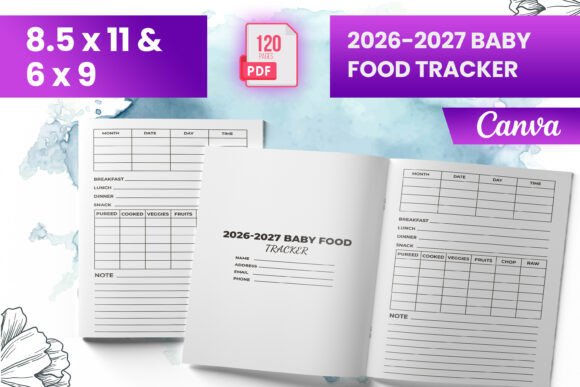
While designed for newborns through six months, the structure remains relevant well into toddlerhood—with thoughtful adaptation. The same daily log pages can track potty-training progress (recording attempts, successes, accidents, and fluid intake), monitor food sensitivities (logging meals alongside rash onset or digestive symptoms), or support behavioral observation (noting tantrum triggers, duration, and calming strategies used). The blank-note sections become invaluable for capturing language milestones (“said ‘dada’ unprompted”), motor development (“crawled upstairs unassisted”), or social-emotional cues (“smiled at mirror for 30 seconds”). Because the logbook is delivered as downloadable PDF and EPS files—including a print-ready cover—the user retains full control: pages can be printed individually, reordered, or even integrated into larger care binders alongside vaccination records or developmental screening tools.
Why Print-Based Tracking Still Matters in a Digital Age
Smartphone apps promise automation—but they also introduce friction: notifications interrupt bonding moments, battery life fails at critical times, and data privacy concerns linger. More importantly, the physical act of writing slows cognition, encouraging reflection. Studies in cognitive psychology suggest that handwritten note-taking improves retention and comprehension compared to typing. When a parent pauses to write “6:15 a.m. – 10 min right side, 7 min left, fell asleep at breast,” they’re not just logging—they’re observing, assessing, and internalizing their baby’s rhythm. The Daily Baby Care Tracker Log Book respects this embodied knowledge. Its paper-based format eliminates screen glare during nighttime feeds, requires no setup or login, and places zero demand on attention beyond the immediate caregiving task. And because it’s instantly downloadable and printable, there’s no shipping delay—critical during the unpredictable early weeks.
Implementation Tips for Maximum Utility
Getting started doesn’t require perfection. Begin with just one category—say, diaper changes—for two days. Notice how often you’re checking the clock or estimating durations. Then add feeding logs. Within a week, most users report reduced mental clutter and increased confidence in recognizing their baby’s unique cues. Keep the logbook within arm’s reach of key locations: beside the nursing chair, in the changing table drawer, or clipped to a stroller handle. Use consistent shorthand (e.g., “W” for wet, “D” for dirty, “BF” for breastfeed) to save time. Review entries weekly—not to critique, but to spot trends: Is sleep consolidating? Are feedings becoming more efficient? Importantly, treat the “Notes & Observations” section as sacred space—not for judgment, but for curiosity. Phrases like “Baby cooed while watching ceiling fan” or “Cried longer than usual after bath—water temp checked: 98°F” hold quiet diagnostic power over time.
Long-Term Value Beyond the First Year
This isn’t disposable documentation. Completed logbooks become tangible archives—valuable for retrospective reflection, insurance claims related to medical consultations, or even future parenting decisions (e.g., comparing sleep patterns between siblings). Some families scan and archive pages digitally after each month, creating searchable personal health histories. Others repurpose blank pages for milestone celebrations—taping in first locks of hair or tracing tiny feet beside corresponding date stamps. The inclusion of an EPS cover file means creators can brand editions for clinics, lactation consultants, or parenting educators—extending its reach while maintaining clinical integrity. For researchers studying infant sleep or feeding behaviors, anonymized aggregated logs (with consent) offer rich, real-world datasets distinct from lab-controlled observations.
In essence, the Daily Baby Care Tracker Log Book functions as both compass and chronometer: guiding daily decisions with gentle structure while preserving the irreplaceable, fleeting details of early life. It doesn’t dictate how to parent—it empowers caregivers to see more clearly, respond more confidently, and remember more fully. When consistency feels elusive, this tool offers not rigidity, but resonance: a quiet, reliable way to meet your baby, day by day, with presence and purpose.