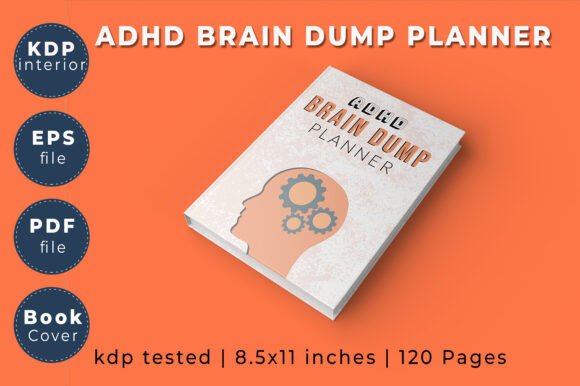
ADHD Brain Dump Creative Focus Planner
If your mind feels like a browser with 47 tabs open—some playing music, others loading slowly, and a few you forgot you opened—you’re not alone. Many adults with ADHD carry mental clutter that makes it hard to start tasks, stay focused, or even remember what they meant to do five minutes ago. The ADHD Brain Dump Creative Focus Planner isn’t another rigid productivity system. It’s a gentle, neurodivergent-friendly tool designed to meet your brain where it is—racing, creative, scattered, or exhausted—and help you make sense of it all without shame or pressure.
What This Planner Actually Does (No Jargon, Just Clarity)
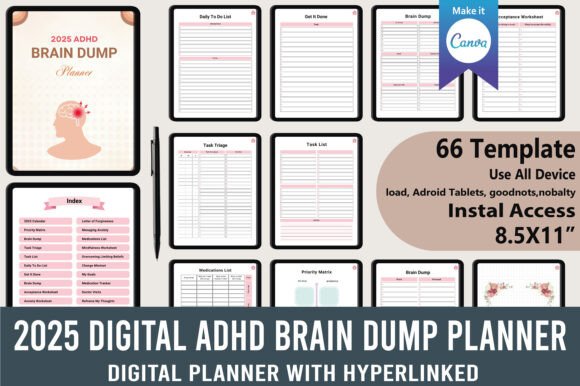
At its core, the ADHD Brain Dump Creative Focus Planner helps you offload thoughts before they pile up. Think of it as hitting “save draft” for your mind. Instead of holding onto reminders, worries, ideas, or half-formed plans, you write them down in dedicated spaces built for how ADHD brains process information: visually, flexibly, and relationally.
It includes more than just blank pages. Each section serves a specific purpose grounded in real-life ADHD challenges—like forgetting appointments, getting stuck on small decisions, or feeling overwhelmed by emotions without knowing why. For example, the Brain Dump Pages give you space to spill everything out without editing or judging. Then, the Getting It Together Section helps you sort those raw thoughts into categories: “Do now,” “Schedule later,” “Delegate,” or “Let go.” That simple shift—from chaos to choice—can reduce decision fatigue and build momentum.
Why It Works for Real People (Not Just “Productivity Gurus”)
This planner resonates because it respects neurodivergent thinking—not as something to fix, but as something to support. A graphic designer with ADHD might use the Priority Matrix to decide which client revision to tackle first when both feel urgent—but only one has a hard deadline. A college student might fill out the Anxiety Worksheet before exams to spot patterns (“I always panic when I haven’t reviewed notes aloud”) and test calming solutions (“Reading notes aloud for 10 minutes lowers my stress by 60%”).
Even small habits add up. Tracking mood daily helps identify links between sleep, energy, and focus. Logging deep breathing sessions builds body awareness—especially helpful if you tend to dissociate during stress. And the Daily Favorite Affirmations aren’t fluffy slogans; they’re grounded reminders like “My focus shifts—and that’s okay” or “I don’t need to earn rest.” These quietly rewire self-talk over time.
Where and How It Fits Into Your Life
You don’t need to commit to an hour of journaling every morning. Many users start with just two minutes: one brain dump page before checking email, or filling out the Task List Task Triage while waiting for coffee to brew. Creatives use it alongside digital tools—jotting messy ideas in the planner first, then transferring polished versions to Notion or Trello. Entrepreneurs keep it open during planning sessions to capture sudden insights and avoid losing them mid-call.
Students find the Goal Action Plan especially useful for breaking research papers or group projects into bite-sized steps—even if those steps are as simple as “find three sources” or “text teammate about meeting time.” No step is too small. The planner honors effort, not just outcomes.
Realistic Expectations and Gentle Guidance
This isn’t a magic fix. It won’t eliminate rejection sensitivity, time blindness, or emotional dysregulation overnight. What it *does* offer is consistency—a predictable place to return to, whether you’re having a high-energy day or one where getting out of bed feels like climbing a mountain.
A few things to keep in mind before starting:
- Start small. Pick one section—maybe the Daily Mood Journal or Brain Dump Pages—and use it for three days. See how it feels before adding more.
- It’s okay to skip days. Missing a page doesn’t mean you’ve failed. Open it again when it feels useful—not obligatory.
- Customize freely. Use colored pens, stickers, arrows, or doodles. If the Mindfulness Journal prompt doesn’t resonate, rewrite it. Your version is the right version.
- Pair it with movement. Some users find writing more accessible after a short walk or stretch—especially if sitting still feels physically uncomfortable.
More Than Paper—A Shift in Self-Relationship
Over time, using the ADHD Brain Dump Creative Focus Planner often changes how people relate to their own minds. You begin to notice patterns: “I brainstorm best in the shower, so I’ll jot ideas there and transfer them here.” Or “When my anxiety spikes, my handwriting gets smaller—I’ll check the Anxiety Worksheet next time that happens.” That awareness builds self-trust.
For freelancers juggling multiple clients, the Medications List and Exercise Tracker become quiet anchors—helping link physical well-being to mental clarity. For educators managing lesson plans and student needs, the Problem-Solving Worksheet offers structure without rigidity: define the issue, list possible actions, pick one to try, reflect. No perfection required—just progress.
Who Benefits Most—and Why
This planner shines for anyone who’s tried traditional planners and felt defeated—not because they lack discipline, but because those systems assume linear thinking, consistent energy, and predictable attention spans. The ADHD Brain Dump Creative Focus Planner assumes none of that. It meets you in the mess and helps you find your way through—with compassion, clarity, and zero judgment.
Whether you're launching a side hustle, finishing a degree, parenting while managing your own ADHD, or simply trying to enjoy more calm moments in a noisy world, this tool supports sustainable focus—not forced productivity. It reminds you daily: your brain isn’t broken. It’s just waiting for the right kind of support.